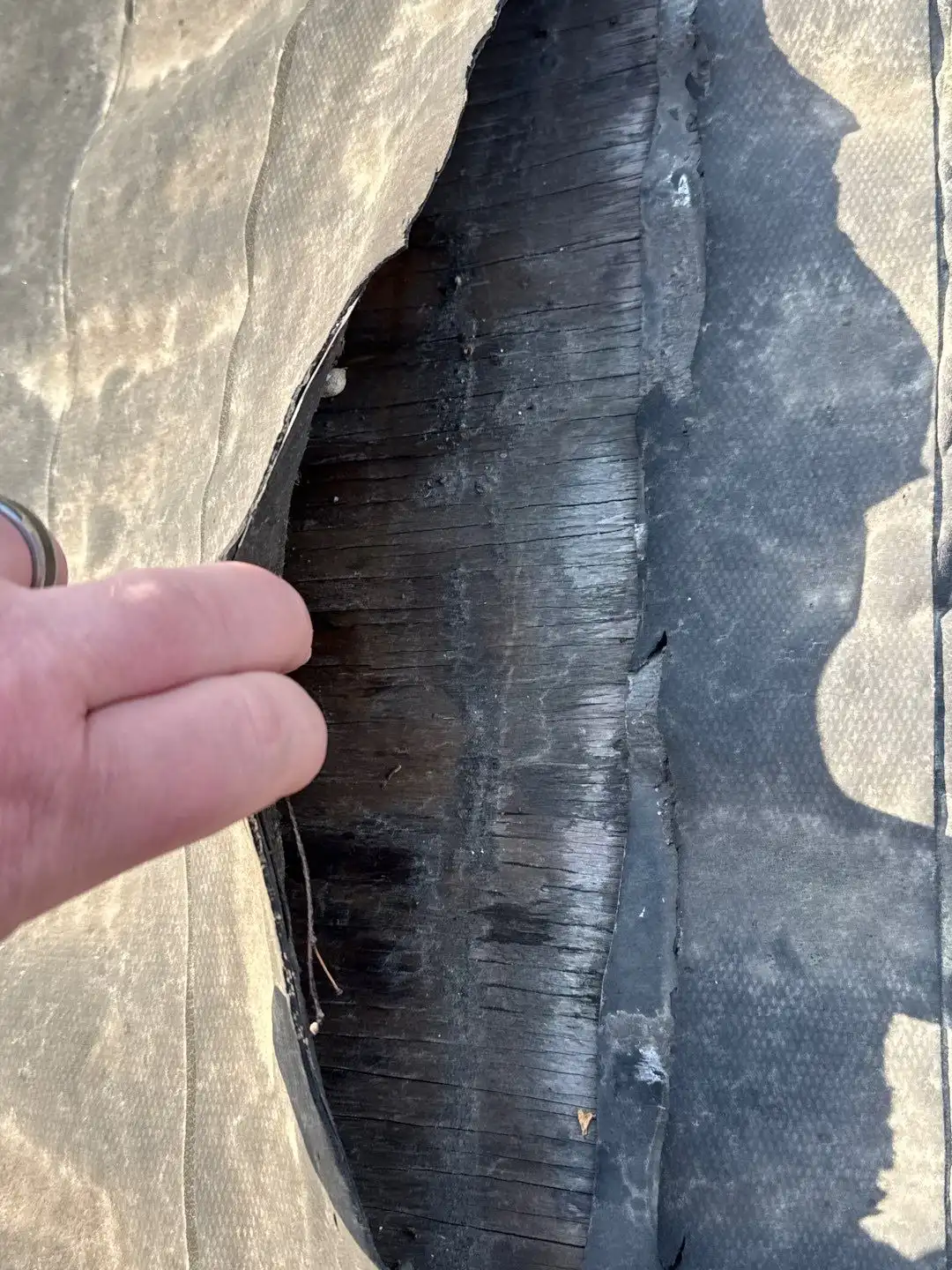
Problem: Your Roof Leaks, but the Structure Is Still Sound
You are catching drips in buckets after every storm, yet the decking, insulation, and structural members are intact. Tearing off a roof that still has life in it wastes money and creates landfill waste your tenants did not sign up to fund.
Solution: Targeted Repairs Followed by a Full Coating System
We start by finding every active leak, not just the visible ones. That means infrared scanning, seam probes, and a careful look at penetrations, drains, and parapet walls. Once the wet insulation is cut out and replaced, seams are reinforced and flashings are detailed, we apply a coating system that turns the whole roof into a single monolithic membrane. For most Old Town Carmel buildings this means two coats of silicone or acrylic over a primer, with reinforcing fabric at every seam and penetration. If the leak source is unclear, our roof leak origin detection process pins it down before any coating goes on. For active leaks, Old Town Carmel Commercial Roofing prioritizes tarping and dry in work so the interior stops taking on water while the full restoration is scheduled.
Problem: You Cannot Tell If Coating or Replacement Makes Sense
Coating contractors say coat. Replacement contractors say replace. You just want a straight answer based on your actual roof.
Solution: A Real Inspection With Moisture Mapping
The deciding factor is how much of the existing roof is wet. If saturated insulation covers more than roughly a quarter of the deck, coating over it traps moisture and the new system fails early. We core test, scan, and measure. If the numbers say replacement, we say replacement. Our breakdown on when to coat vs replace your commercial roof walks through the same decision criteria we use on every Old Town Carmel project. We also factor in the age of the membrane, the condition of the metal edge and flashings, and whether the existing surface will accept and hold a primer. A roof with widespread blistering, brittle seams, or failed adhesion is not a coating candidate no matter how dry the insulation reads.
Problem: You Want the Warranty to Actually Mean Something
A 15 year warranty sounds great until you read the exclusions and realize maintenance lapses void it.
Solution: Match Warranty Length to Mil Thickness and Plan for Maintenance
Coating warranties in Old Town Carmel typically run 10, 15, or 20 years, and the longer terms require thicker applications, sometimes a recoat at year 10, and documented annual inspections. We explain what each tier requires before you sign, and we offer a maintenance plan that keeps the warranty intact without surprises. Roughly 90 percent of premature coating failures we see come from skipped maintenance or installing over a roof that should have been replaced, both avoidable problems.
Solution: Keep the Paper Trail That Protects Your Investment
Manufacturer warranties hinge on documentation. Old Town Carmel Commercial Roofing provides a closeout package that includes batch numbers, wet mil and dry mil readings logged per area, photos of prep and detail work, and the signed warranty certificate. Annual inspection reports are added to that file each year. If you ever sell the building or file a claim, the record is already organized and defensible.
Problem: The Quotes You Are Getting Vary Wildly
One contractor quotes $2.50 per square foot, another quotes $7. Both call it a coating job. You have no way to compare apples to apples.
Solution: Understand What Drives the Price
Coating cost in Old Town Carmel is driven by four things: the coating chemistry, the mil thickness, the prep work required, and the warranty length. A thin acrylic at 20 mils with minimal prep is a different product from a 30-mil silicone over a fully detailed and primed substrate. Here is what typical pricing looks like for Old Town Carmel commercial buildings:
When you compare bids, look past the per square foot number and ask three questions: how many gallons per square are being applied, what specific repairs are included before the coating, and who pulls the warranty. Material data sheets from the manufacturer will tell you the minimum thickness required for the warranty term offered. If a bid promises a 15 year warranty but the gallon count works out to only 1.5 gallons per square, the math does not support the term.
Problem: You Are Worried About Business Disruption During the Project
Your tenants cannot have fumes in the HVAC intake, noisy equipment over their meetings, or parking lot blocked all week.
Solution: Sequenced Work and Clear Communication
A typical 20,000 square foot coating project in Old Town Carmel takes one to two weeks of on roof work depending on prep. We schedule loud prep work outside peak hours where possible, mask HVAC intakes during application, and stage materials in a corner of the lot rather than blocking customer access. If your building has had prior water intrusion through the roof, we coordinate with the team handling any attic water damage from roof leaks so interior repairs and roof restoration line up cleanly. Tenants get a written schedule before mobilization, and Old Town Carmel Commercial Roofing posts a single point of contact who answers questions during the workday so property managers are not relaying complaints back and forth.
Problem: Ponding Water Will Not Drain From Your Flat Roof
You have areas that stay wet for days after a rain. Standard coatings are not rated for permanent immersion and will degrade quickly in those spots.
Solution: Address Drainage First, Then Specify the Right Chemistry
We tackle the ponding before the coating goes on. Options include:
- Adding tapered insulation crickets to redirect flow toward existing drains
- Installing additional scuppers or overflow drains where the deck allows
- Specifying a silicone coating, which tolerates ponding far better than acrylic in the spots that cannot be fully drained
Drain strainers and sump areas also need attention. Clogged strainers cause a surprising share of the ponding complaints we get in Old Town Carmel, and they are an easy fix that should not require a coating decision at all. Once flow paths are restored, we mark any remaining low spots during prep so the silicone gets the heavier mil build exactly where the water will sit.